what size amp does it take to push 800 watt sub woofer
How to Choose a Power Amplifier
What practice you need in a power amplifier? Combine the correct corporeality of wattage with the right features, and that'southward the correct power amp for your live PA organisation. Sounds piece of cake, huh? Only there are and then many aspects to consider when purchasing a ability amp. That's why we created this Power Amplifier Ownership Guide, to walk you through all the factors involved in choosing the perfect ability amp for your needs.
- Matching Amps to Speakers
- Impedance: Information technology's All in the Ohms
- Class D Amplifiers – Smaller, Cooler, Lighter
- Operating an Amplifier in Bridged Style
- What Does a Limiter Practise?
- What to Look For…
Matching Amps to Speakers
When you're matching a power amp to a PA speaker setup, a good rule of thumb is to choice an amplifier that can deliver power equal to twice the speaker's programme rating. This means a speaker with a "nominal impedance" of 8 ohms and a programme power rating of 350 watts volition require an amplifier that tin produce 700 watts into an eight-ohm load. For a stereo pair of speakers, the amplifier should be rated at 700 watts per channel into 8 ohms. A quality professional loudspeaker can handle transient peaks to a higher place its power rating if they occur.
Using an amp with some extra "headroom" will assist assure that only clean, undistorted power gets to your speakers. Headroom is the difference between the normal operating level of an amplifier, and the maximum level that the amp can pass without distorting. Music has broad variations in dynamic range; without plenty headroom, yous'll find your gear clipping (distorting) far too frequently! Some professional person amplifiers are designed then they have additional headroom. These amps can cleanly reproduce transient peaks that exceed their rated power. In this example select a model with an output ability rating equal to the program power rating of the speaker. Consult the amplifier manufacturer or owner's manual to learn more.
In some applications, such equally critical listening in a studio environment, it is important to maintain peak transient capability. For these applications, apply an amplifier that tin deliver two- to four-times more power than the speaker's programme power rating.
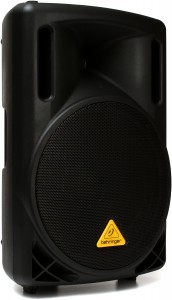
If budget restraints or legacy equipment force you to use an amplifier with less power, extreme care should be taken to see that the amplifier is non driven into clipping. Information technology may surprise y'all to learn that low power tin result in damage to your speaker or organisation.
Impedance: It'due south All in the Ohms
Ohms are measures of resistance. Sound amplifiers are commonly designed to piece of work with four, eight or xvi ohms of resistance, and optimum organisation performance can be obtained if the total ohm load of the loudspeakers is exactly correct for the amplifier. If the full loudspeaker impedance is too high, the power delivered to the loudspeakers will exist reduced. If the total loudspeaker impedance is as well depression, the power delivered to the loudspeakers will be higher, which can overload your speakers and harm the amplifier. You can connect any corporeality of speakers to one amplifier provided that they are correctly wired and don't collectively autumn below the specified output impedance of the amp.
Multiple loudspeakers can be connected together. Dual speaker connections whether on an amplifier, a mixer/amplifier, or a speaker enclosure are all wired in parallel. The following full general rule volition help y'all match the impedance of PA speakers to power amplifiers for optimized functioning (avoiding overloads and other issues). Don't worry, information technology's an easy i to use and remember.
Parallel
To keep life as simple every bit possible, most people put enclosures of the same impedance in a parallel circuit. If you do this it'southward all simply a matter of dividing that impedance by the number of speakers.
Have the ohm rating for the speakers and divide past the number of speakers.
If y'all have 4 speakers that are rated at 16 ohms, you would take 16/four to get the overall rating of 4 ohms. (Similarly, two 8-ohm speakers in parallel = 8/two = 4 ohms.)
The following is a quick reference listing of some commonly used parallel loads: (Avert the ones that go lower than output impedance rating of your power amp.)
Class D Amplifiers – Smaller, Cooler, Lighter

Ability amplifiers characteristic a variety of circuit designs categorized into several classes (Class A, B, AB, etc.). Historically, Grade A and Course AB designs dominated the marketplace. Although they deliver the all-time audio quality, their components make them large and heavy, and their inefficiency results in high ability consumption and oestrus output. Over the past decade, Class D power amplifiers have taken over the live sound market. This grade of amplifier produces as much ability as Class A or Form AB amps, but far more efficiently, all while maintaining sound quality that is sufficient for audio reinforcement and dramatically reducing the size and weight of your amplifier rack.
Operating an Amplifier in Bridged Manner

A method of configuring a two-channel amplifier so that the ii channels can be "ganged" or bridged to exist used together on one load. The purpose of this is to take a two-channel amp and create a larger single channel amp that can deliver more ability. The result is more than power to the speaker than would be possible from either channel alone. For example, a 100-watts-per-channel amp may output a single aqueduct of 300 watts afterwards bridging. Most modernistic amps have a special switch to enable mono bridge operation.
Typically, amplifiers operating in bridged mode can only do and then with speakers that accept twice the impedance of the minimum rating load on the amp. For example, an amp rated at 4 ohms running in normal way volition generally crave eight ohms in bridged way.
What Does a Limiter Do?
Many amplifiers feature a congenital-in limiter for maximizing signal levels while preventing distortion, preventing overload in a betoken concatenation, setting a maximum volume level to protect users of in-ear monitors, protecting speakers and amplifiers from clipping, and then on. Any time you want to plant a maximum proceeds setting and preclude signals from passing it, a limiter is your tool of choice!
What to Look For…
How practice I choose the correct amplifier ability for my speaker system? When information technology comes to choosing a power amplifier there are a two important factors to consider.
Power
Generally you should pick an amplifier that can deliver power equal to twice the speaker'southward plan/continuous power rating. This ways that a speaker with a "nominal impedance" of 8 ohms and a program rating of 350 watts volition crave an amplifier that can produce 700 watts into an 8 ohm load. For a stereo pair of speakers, the amplifier should be rated at 700 watts per channel into 8 ohms.
Headroom
Using an amp with some extra "headroom" will assist clinch that only make clean, undistorted betoken gets to your speakers. Headroom is the departure betwixt the normal operating level of an amplifier, and the maximum level that the amp can laissez passer without distorting. Music has wide variations in dynamic range; without enough headroom, you'll find that your gear volition clip and distort
If you're unclear nearly all of the options available, the best thing to do is call a Sweetwater Sales Engineer at (800) 222-4700 to help you determine which ability amplifier is best suited to your needs.
Source: https://www.sweetwater.com/insync/power-amp-buying-guide/
0 Response to "what size amp does it take to push 800 watt sub woofer"
Post a Comment